Correspondence
Blog
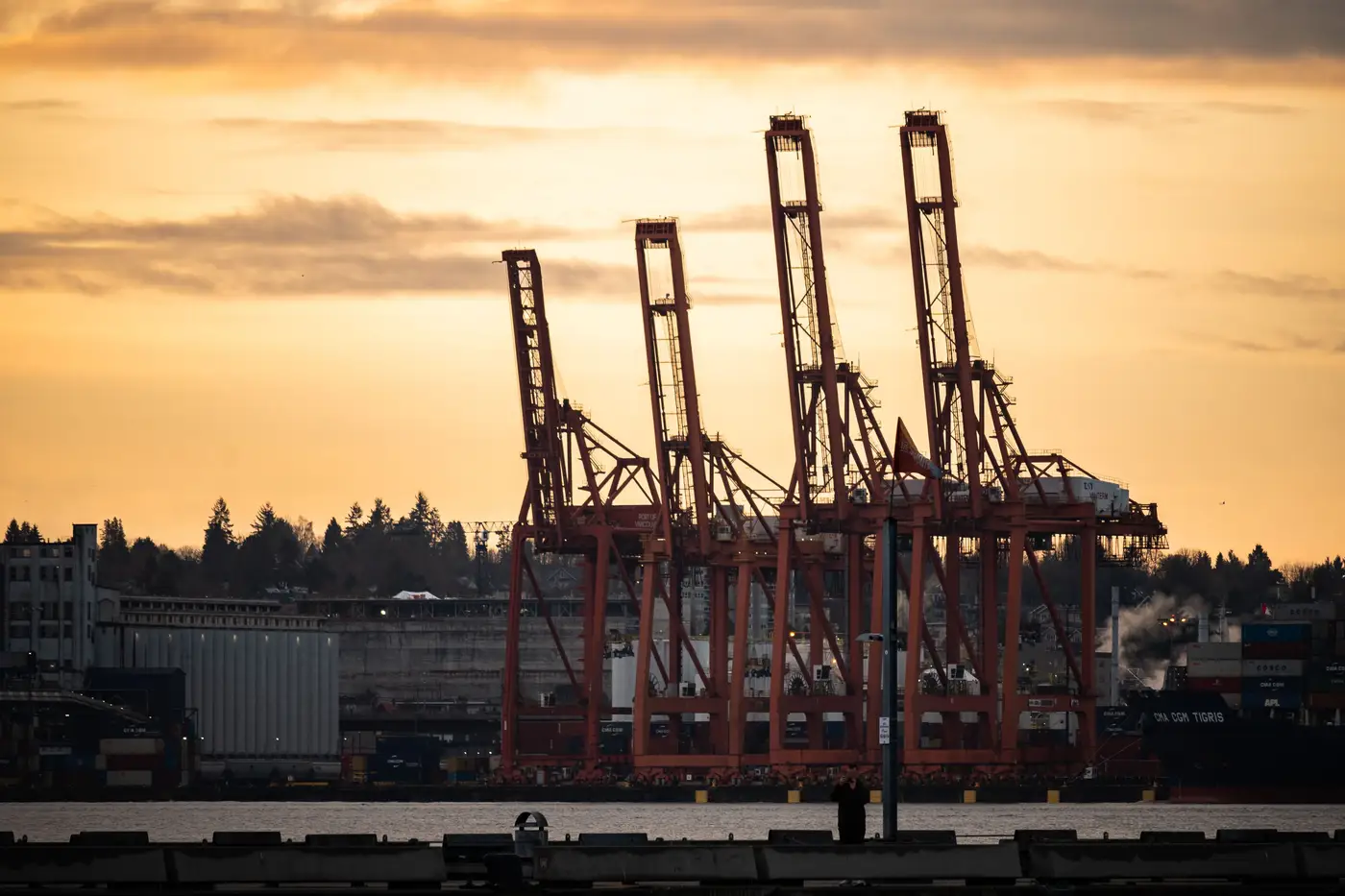
 Field notes: the berth where three makers' cranes stood side by side
A field note on mixed-OEM berths, why they happen, and what they tell a market-intelligence lead that a single order sheet never will.
 What a crane order backlog tells you about regional OEM share
Order backlog numbers show what an OEM has sold. Here's why they're a lagging, noisy proxy for who actually holds a region's crane fleet.
 What is a crane serial number plate, and why satellite imagery can't read one
A serial number plate is a physical tag riveted to a crane. Here's why overhead imagery can't read it, and what it can tell you instead.
- What is gantry travel, and why rail length caps berth crane capacity
Gantry travel, crane centers, and rail length explained: why berth length alone never tells you how many STS cranes a terminal can run.
 e-RTG vs diesel RTG: how to tell them apart in satellite imagery
How to spot the difference between e-RTG and diesel RTG cranes in satellite imagery, from genset housing to cable reel and conductor rail tells.
- Field notes: the shadow that gave away a boom height
A photogrammetry field note on using shadow geometry to cross-check ship-to-shore crane boom height when the imagery alone won't settle it.
 How to verify crane manufacturer after a terminal repaints its fleet
A repaint strips the decals, not the structure. Here's what to check when a terminal's new livery hides who actually built the crane.
- What a twin-lift spreader does to a quay crane's capacity rating
Twin-lift and tandem-lift spreaders change how a quay crane's tonnage rating works. Here's the mechanism, and why it matters for fleet tracking.
- Field notes: a fourth berth's worth of cranes, before anyone announced it
A mid-size terminal picked up three new ship-to-shore cranes with no press release, no permit filing anyone flagged, and no capex announcement for months.
- How many STS cranes does a container berth need?
How many STS cranes a container berth carries, what drives the ratio, and how to read crane density at a terminal without a site visit.
- ASC vs RTG: telling yard cranes apart in satellite imagery
A field guide to reading rail tracks, span geometry, and parking patterns to separate ASCs from RTGs in VHR satellite and aerial imagery.
- Boom position and the photogrammetry height read on a ship-to-shore crane
Why boom angle changes what a satellite height read measures on an STS crane, and how to tell stowed from operating height in an image.
- New delivery or retrofit? Reading STS crane changes in satellite imagery
How to tell a new STS crane delivery from a boom replacement or modernization job using satellite imagery, before the trade press confirms it.
- What is a super-post-panamax crane? Quay crane classes explained
A plain-language guide to quay crane size classification, from Panamax to Super-Post-Panamax, and what the outreach numbers mean on a berth.
- How to identify a crane manufacturer from boom shape and silhouette
A field guide to reading boom geometry, portal design, and machine house shape to attribute ship-to-shore cranes by maker without a site visit.
- STS crane vs mobile harbor crane: telling them apart in satellite imagery
How to distinguish ship-to-shore cranes from mobile harbor cranes in VHR satellite imagery, using rail footprint, boom shape, and quay position.
- RTG vs RMG: telling yard cranes apart from above
How to tell rubber tyred gantry cranes from rail mounted gantry cranes in overhead imagery, by rails, stance, and shadow.
- Crane outreach and backreach: what they mean and why vessel size depends on them
Outreach sets how many rows across a ship an STS crane can serve. Backreach governs apron space behind it. Here's how the two differ.