How to verify crane manufacturer after a terminal repaints its fleet
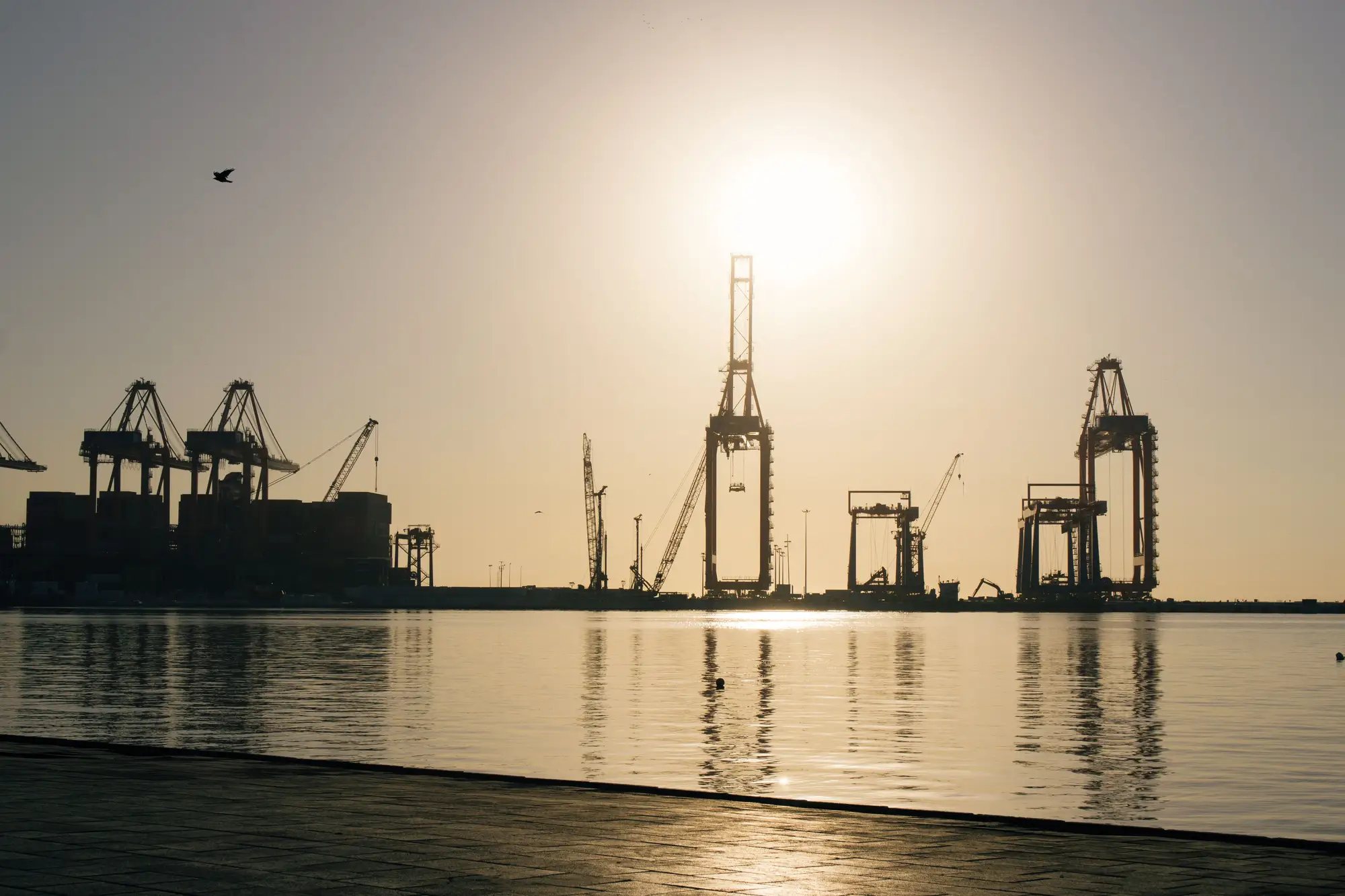
A concession changes hands, a new operator takes over the box terminal, and within a year the whole crane row gets a fresh coat of corporate paint. The old decals are gone, the boom tips match the new brand book, and whatever manufacturer markings used to sit on the machine house or the portal leg are buried under primer. If you're tracking OEM share at that terminal, the repaint just deleted your easiest data point.
It didn't delete the crane, though. The structure underneath a livery change is still the structure a manufacturer built, and most of the identifying detail was never in the paint to begin with.
What a repaint actually changes
Repaints touch the skin: boom color, machine house panels, the operator's logo on the leg, sometimes a tagline across the sill beam. What they don't touch is the steel geometry, because reworking the boom profile or the portal frame is a fabrication job, not a paint job. A terminal operator switching from red-and-white to the new owner's house colors isn't commissioning a structural retrofit. They're commissioning a paint crew.
That matters because manufacturer identity lives mostly in structural habits, not in the logo. ZPMC's twin-boom A-frame silhouette, Konecranes' machine house roofline, Liebherr's lattice-boom profile on older units, the portal leg spacing and rail gauge a given yard standardized on years ago: none of that moves when the color scheme does. A crane that reads as a Doosan STS before the repaint still reads as a Doosan STS after it, if you know what to look at instead of the badge.
Reading structure instead of decals
A few things to check before you write off a crane as unidentifiable:
- Boom and trolley type. Single-trolley vs. dual-hoist, A-frame vs. single-leg boom, the shape of the boom's transition at the waterside tip. These are manufacturer- and era-specific choices that survive any number of repaints.
- Machine house silhouette. The roofline, window layout, and placement relative to the trolley girder vary by builder and often by production generation. A machine house shape is closer to a fingerprint than people assume.
- Portal leg and sill beam proportions. Leg spread, rail gauge, and counterweight placement get set at commissioning and essentially never change afterward, repaint or not.
- Height and reach. Backreach, outreach, and lift height under spreader are physical numbers tied to the original spec the terminal ordered. A height/reach read from photogrammetry gives you something to check against known model ranges from the major builders, independent of what color the boom is this year.
- Continuity in imagery over time. If you have an image of the same crane position from before the repaint, confirming it's the same physical unit (not a swap) lets you carry forward any attribution you'd already made, rather than starting from zero.
None of this requires getting a decal in frame. It requires a reasonably sharp overhead or oblique shot and a reference sense of what each OEM's cranes typically look like at that boom type and vintage.
When attribution still isn't certain
Some cranes genuinely resist attribution after a repaint, especially older secondhand units that have already changed hands once and were repainted at the previous terminal too. Structural cues get you most of the way on most cranes, not all of them. Where a terminal's own press release or delivery announcement from the original order is findable, it's worth checking before you lean entirely on silhouette, because that's still the cleanest source when it exists.
For an OEM market-intelligence team, the real cost of a repaint isn't the one crane you can't place. It's redoing the terminal-by-terminal count every time an operator refreshes its livery, because the visible marker you were relying on just disappeared. A dataset built on structural dimensions and manufacturer attribution rather than decals doesn't need to be rebuilt every time a terminal changes hands, which is the premise behind Crane Fleet Mapping's annual inventory of ship-to-shore and yard cranes by maker.
If your terminal list just got repainted and your attribution notes are now out of date, that's exactly the gap this inventory is built to close.