What is a super-post-panamax crane? Quay crane classes explained
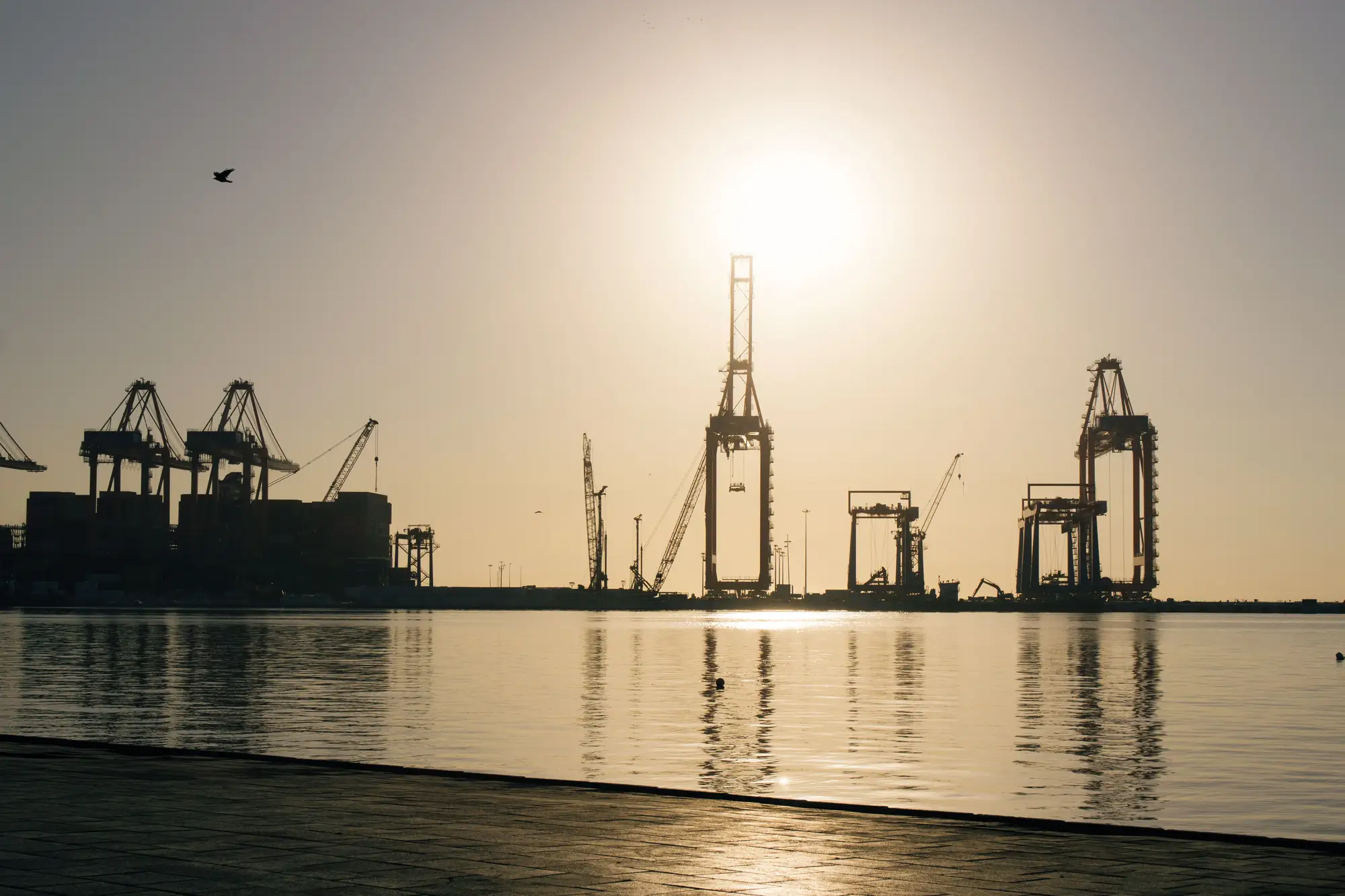
Anyone scoping berth capability ends up sorting cranes into classes sooner or later. The terms get thrown around loosely in RFPs and vessel-call notices, so it's worth pinning down what "super-post-panamax" means before you use it in a report.
Where the panamax labels come from
The names trace back to the Panama Canal, not to any crane manufacturer's spec sheet. Before the 2016 lock expansion, canal transits capped vessel beam at roughly 32.3 m. A "Panamax" ship was built to that limit, and the quay cranes serving Panamax boxships needed enough outreach, the horizontal distance the trolley travels from the waterside rail out over the vessel, to span that beam plus the rows stacked on deck.
Once ships started being built wider than the old locks allowed, the industry needed a new word. "Post-Panamax" covers vessels (and the cranes built to work them) sized past the pre-expansion canal limit. That's not one fixed number so much as a boundary that kept moving as shipyards and terminals pushed beam and row count up together.
The outreach classes, in order
Crane makers and terminal planners generally talk about a handful of steps up the ladder:
- Panamax: outreach sized for the pre-2016 canal beam limit, roughly 13 container rows across the deck.
- Post-Panamax: wider outreach for beams beyond the old canal limit, into the 16-18 row range.
- Super-Post-Panamax: a further jump in outreach and lift height to handle 18-22+ rows across, the class most new STS orders at major gateway terminals have landed in for the last decade or so.
- Malacca-max: the theoretical upper bound tied to the Strait of Malacca's draft, rarely built out in practice but still used as a reference point in tender documents.
None of this is standardized the way, say, a container TEU count is. Manufacturers and port authorities use these labels as shorthand, and the exact outreach and lift-height figures attached to each class drift a few meters depending on who's writing the spec. What stays consistent is the logic: wider beam, more rows, more outreach, taller lift to clear bigger deck stacks.
Why the class matters more than the crane count
For market intelligence, a bare crane count per terminal tells you capacity in a rough sense. The class tells you something sharper: which berths are actually equipped to turn an ultra-large containership without a vessel swap or a slow, partial discharge. A terminal with six older Panamax-class cranes and one with six super-post-panamax units are not competing in the same tier, even if the headline number looks identical in a port authority press release.
That's also where the manufacturer attribution gets interesting. OEMs don't win every class evenly. One builder's order book might lean heavily toward super-post-panamax orders at gateway ports while another holds the mid-size replacement market at feeder terminals. You can't see that pattern from a single terminal's equipment list. You need it across every terminal in a market, tracked over time as operators retire old iron and bring in bigger booms.
Walking every berth to log crane class, maker, and rough outreach is the traditional way to build that picture, and it's slow enough that most lists go stale within a year of being compiled. A terminal-by-terminal crane inventory built from annual VHR imagery gets at the same thing from overhead: count, type, maker where the branding is visible, and a height and reach estimate pulled from photogrammetry, for every container terminal in a market at once.
If you're trying to track which OEM is winning the super-post-panamax order book terminal by terminal, that's exactly the gap Crane Fleet Mapping is built to close.