New delivery or retrofit? Reading STS crane changes in satellite imagery
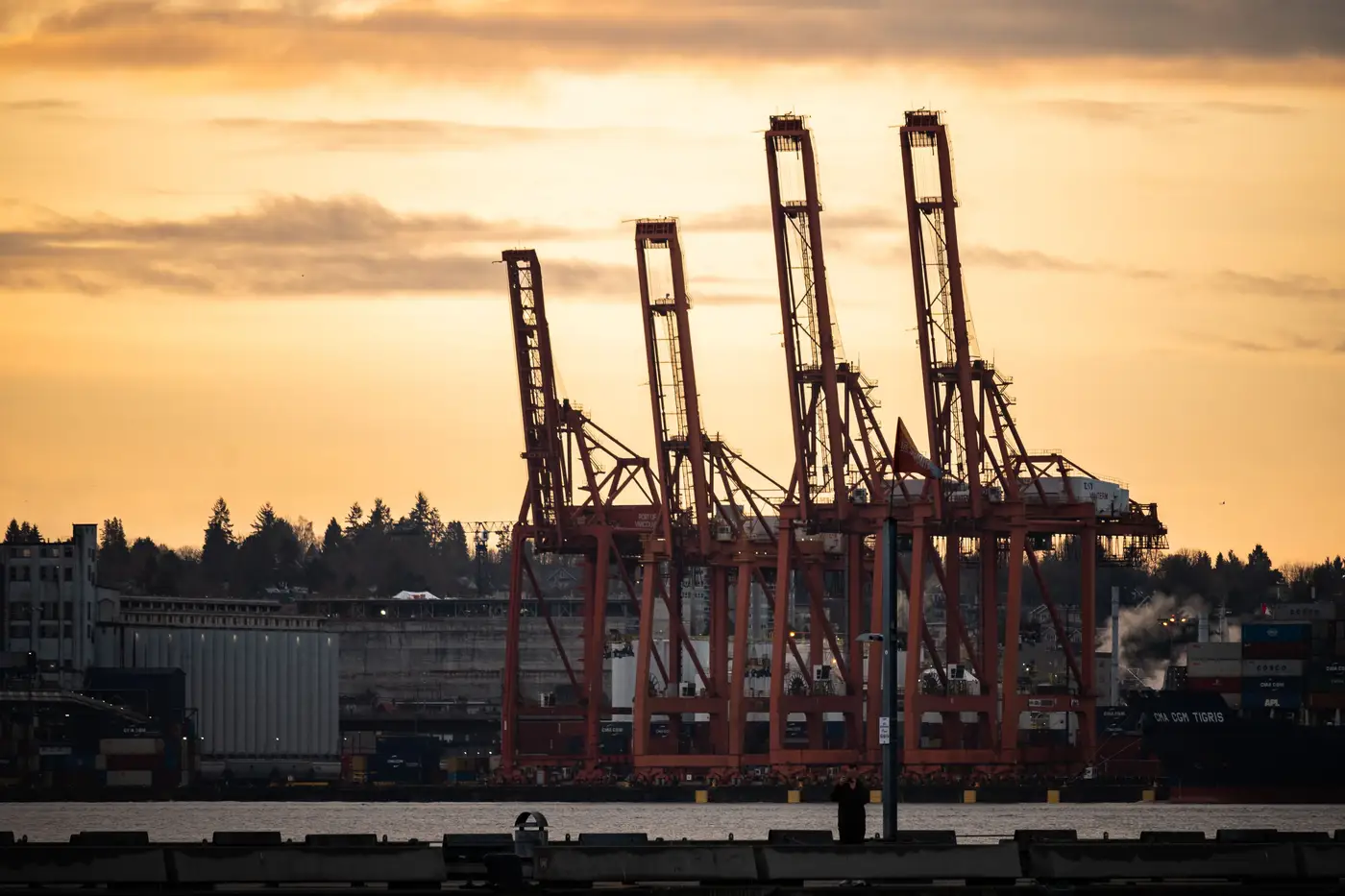
A terminal operator announces "crane modernization" and you need to know, fast, whether that means a new order landed on a heavy-lift ship or whether the yard crew is swapping a boom on an existing machine. The press release rarely says which. The imagery usually does, if you know what you're looking at.
Why this matters for the count
If you're tracking crane population by maker, the difference between a new delivery and a retrofit changes two different numbers. A new delivery adds a unit to the terminal's fleet and a sale to whichever OEM built it. A retrofit, whether it's a boom swap, a trolley upgrade, or a full modernization package, keeps the unit count flat but can shift the attribution if a different shop did the work on an existing frame. Mixing the two up means your maker tally is wrong even when your crane count is right.
The footprint test
Start with the portal. On a rail-mounted STS crane, the legs sit on a fixed gauge and that gauge doesn't move without a structural rebuild, which almost never happens. If you see a crane at a berth position where no crane existed in last year's pass, and the rail footprint is new or extended, that's a new delivery. If the legs are sitting on rail that was already there, with the same spacing you measured twelve months ago, you're looking at the same base structure. Whatever changed is a retrofit.
Erection sequences give this away even faster. A new STS crane doesn't show up assembled. It arrives in pieces or semi-assembled on a heavy-lift vessel, and the imagery between deliveries often catches a crawler crane or a jack-up barge parked at the berth doing the stacking. If your last pass shows bare quay and this pass shows scaffolding, a temporary crawler, and a partial structure, you've caught a new unit mid-build, not a retrofit.
The boom swap signature
Boom replacement is the retrofit that's easiest to mistake for a new order, because the silhouette changes so much. A terminal extending backreach or outreach for bigger ships will pull the old arm off and set it down on the quay, sometimes on the apron, sometimes loaded onto a barge for removal, while the replacement waits nearby to go up. For a window of weeks you may catch the crane stripped down to just the A-frame and machinery house, which looks dramatic in a single frame but isn't a new unit. The portal and legs stay put through the whole sequence. Measure the new arm's length and backreach against the prior pass: a longer reach on an unchanged base confirms a boom swap, not a new crane.
Full modernization packages are quieter. New electrical cabinets, a re-clad machinery house, or a fresh coat of paint on the arm can all show up as a change in the crane's appearance without any change in dimensions at all. If the portal, leg spacing, boom length, and backreach all match the prior pass within your measurement tolerance, treat it as a modernization on the existing unit and move on. Confirm it by geometry: those four measurements lining up with the prior pass means the same crane got new equipment, not a new build.
Reading maker attribution through a retrofit
A retrofit complicates attribution more than it complicates counting. The original OEM badge and structural design stay with the frame, but a boom replacement or electrical overhaul is often contracted to a different supplier. If your methodology attributes a unit to "who built the crane standing there," a retrofit doesn't change that answer: the frame's maker is still the frame's maker, even with a new arm from another shop. Note the retrofit date and scope separately rather than reassigning the unit, or you'll lose the thread the next time someone asks who actually built that machine.
None of this is a judgment call you want to make terminal by terminal, year after year, from scratch. That's the job behind our terminal-by-terminal crane inventory, which checks every berth annually and flags exactly this kind of change before it shows up anywhere else.
If you'd rather not run this comparison yourself across every terminal in your market, get in touch about the annual crane inventory.