What a twin-lift spreader does to a quay crane's capacity rating
A single-lift spreader picks up one container. A twin-lift spreader picks up two 20-foot boxes side by side on the same headblock, in one cycle, under one hoist. That's the whole idea in one sentence, but it's the part that comes after that trips people up: a crane rated for, say, a single 40-tonne box under single lift is not automatically rated for two 40-tonne boxes under twin lift. The nameplate number most people quote isn't the whole story.
Single lift, twin lift, tandem lift: these aren't the same thing
Worth sorting the terms before going further, because they get used loosely on spec sheets and in conversation alike.
Single lift is one box, one spreader, standard hoist. This is the capacity figure most people mean when they say a crane is "rated at X tonnes."
Twin lift uses a telescoping spreader that extends to grab two 20-foot containers side by side, lifted together as a single cycle under the main hoist. The spreader itself has moving parts and added steel, and that weight comes out of the usable lift.
Tandem lift is a different animal: two spreaders working in sequence or in coordination, sometimes on cranes built with dual-trolley or dual-hoist arrangements specifically for moving four 20-foot boxes at once. Tandem-lift cranes are a smaller subset of the fleet, usually a newer-generation purchase, and they show up disproportionately at terminals running high TEU volumes where cycle time per move matters more than almost anything else.
A crane can be twin-lift capable without being tandem-lift capable, though the reverse is rare. When a spec sheet or a terminal's equipment list says only "twin-lift" with no mention of tandem, that's the telescoping-spreader version, the single-hoist kind.
Why the capacity rating changes under twin lift
The mechanism is straightforward once you see it: the spreader has mass, and that mass rides on the same hoist wire as the cargo. A single-lift spreader is lighter and simpler, so more of the crane's rated hoist capacity is left over for the box. A twin-lift spreader, with its telescoping frame, twist-locks at four corners instead of two, and extra structural steel to keep two boxes rigid under one lift, eats into that same hoist capacity before a single container is even attached.
That's why a crane's spec sheet will sometimes carry two separate numbers: a single-lift rating and a lower per-box rating under twin lift, rather than one number that just gets doubled. A crane capable of lifting one heavy box comfortably under single lift can be meaningfully more conservative per box once it's asked to lift two at once, because the spreader's own weight rides on the same hoist wire as the cargo and eats into the rated capacity before a box ever gets attached.
It also means twin-lift capability isn't just a software or control-system feature you can read off a crane's silhouette. Two cranes with identical boom length and identical gantry rail gauge can have different twin-lift ratings depending on hoist design, wire rope configuration, and spreader vendor, none of which is visible from the quay.
Why this matters if you're tracking equipment across terminals
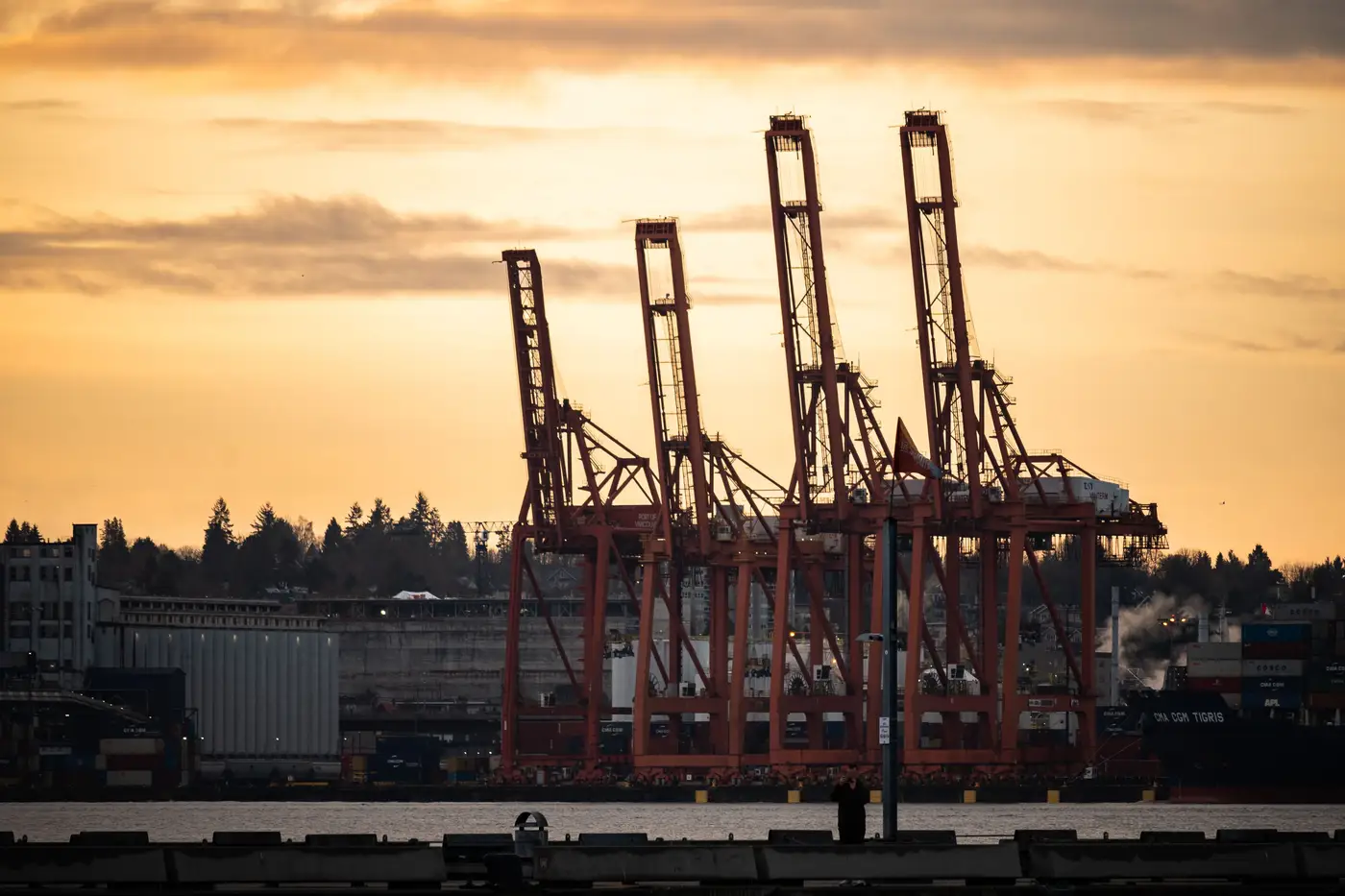
For anyone trying to map ship-to-shore crane capability terminal by terminal, the twin-lift question is exactly the kind of detail that a crane's silhouette doesn't answer. Boom length, outreach, and gauge are readable from overhead; hoist rating and spreader type generally aren't, at least not without a spec sheet or a site visit. A dimension read from height and reach tells you the crane's physical envelope. It doesn't tell you whether that crane is running a single-lift or twin-lift spreader, or what the per-box tonnage is once it is.
That gap is part of why a terminal-by-terminal crane inventory still needs to pair physical attribution (maker, count, type, rough dimensions) with whatever capacity detail is published separately, rather than inferring tonnage from a photograph alone. If you're building that inventory across a market and want the crane count, maker, and dimensional read done once a year without sending someone to every berth, that's the gap Crane Fleet Mapping is built to close.